Digital accessibility reached financial apps through the same channel that reached retailers a decade ago: Title III of the Americans with Disabilities Act, the public-accommodation theory extended to digital properties by litigation rather than regulation — the Ninth Circuit's decision sustaining a website claim against a national pizza chain in 2019 remains the era's landmark — and by now thousands of demand letters and settled actions, with finance apps a standing target category. No ADA regulation specifies app accessibility; the de facto standard the market, the plaintiffs' bar, and the examiners all converge on is WCAG 2.1 Level AA, which is why the question in diligence and demand letters alike is the same: audited against WCAG, remediated to what date, with what ongoing controls.
3G Times publishes information, not legal advice. ADA applicability and state counterparts (including California's Unruh Act with its per-violation damages) are fact-specific and belong with counsel.
What does WCAG 2.1 AA actually ask of a finance app?
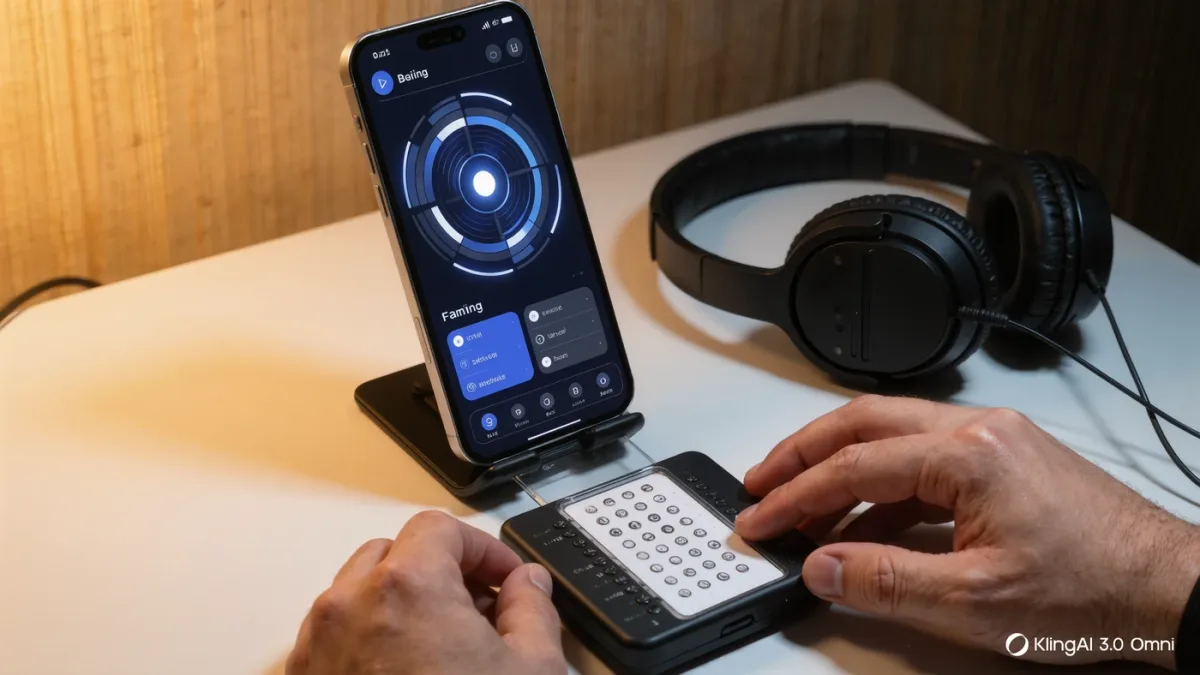
The standard's principles read as usability engineering with legal weight. Perceivable: text alternatives for images, captions for media, contrast ratios that make text readable — the failed contrast check is the classic quick-scan finding. Operable: every function reachable by screen reader and keyboard-alternative navigation, focus order that follows logic, no time-outs that penalize slower interaction — a recurring finance-specific failure, since session-expiration defaults conflict with assistive-technology pacing and need accessible re-authentication designs. Understandable: predictable navigation, clear labels on inputs — the unlabeled account-number field is the screen-reader user's wall. Robust: correct semantics so assistive technologies can parse the interface — the engineering layer everything else depends on. A banking app's particular exposure sits in the money moments: onboarding document capture, transaction confirmation, and dispute flows are where inaccessible design produces not just exclusion but financial harm, which is the damages story.
How does the enforcement actually arrive?
Rarely as a regulator, usually as a letter. The pattern: a serial plaintiff or advocacy organization runs automated scans plus manual testing, identifies failures, and sends a demand citing ADA and state statutes; the parties negotiate a remediation schedule and often a structured settlement; the DOJ occasionally files statements of interest or its own actions in high-visibility matters — including digital accessibility matters in financial services — confirming the theory's vitality. The state layer sharpens it: California's Unruh Act converts ADA theory into per-violation statutory damages, which multiplies the demand's arithmetic. For credit unions and banks, the second enforcement channel is supervisory: fair-treatment expectations and the DOJ's 2024 Title II rule (binding state and local government, including public-entity financial services) signal where the wind blows for regulated entities generally.
| Program element | Market-standard practice | Gap that draws claims |
|---|---|---|
| WCAG 2.1 AA audit | Third-party, annual, per platform | None conducted; or internal-only |
| Remediation roadmap | Dated, prioritized by user impact | Open-ended commitments |
| Development controls | Accessible design system, testing in CI | Fixes without regression gates |
| Feedback channel | Accessible in-app reporting, tracked | Complaints answered by no one |
| VPAT / ACR | Published conformance report | Requested in diligence, produced never |
What does a defensible program look like?
It pairs the audit with the engineering. The audit establishes the baseline — third-party, both platforms, manual testing beyond the automated scanners, because the scanners catch a third of what a screen-reader user hits. The remediation roadmap is dated and impact-priorized: money moments first, then high-traffic flows, then the long tail — and it survives releases through accessibility gates in the design system (accessible components as defaults) and in CI (automated checks catching regressions before they ship). The feedback loop is operational: an accessible in-app way to report barriers, a tracked queue, and response SLAs — because the demand letter's narrative writes itself from ignored complaints. And the conformance report (VPAT/ACR) exists before diligence asks, because in banking it is now a standard counterparty question alongside the SOC 2 report.
Why is accessibility also a fair-treatment question?
Because an inaccessible money moment is differential treatment with a measurable harm: the customer who cannot complete a dispute flow through the app experiences the product worse, and the pattern generalizes across disabled users — precisely the population-level effect fairness regimes read. Financial institutions have folded accessibility findings into their fair-treatment monitoring rather than treating them as a separate litigation silo, which is both the honest framing and the practical one: the same journey audit that walks the app for dark patterns walks it with a screen reader, and one artifact serves both programs.
What does this mean in practice?
- Commission the annual third-party audit — both platforms, manual testing included, findings mapped to the roadmap with dates.
- Gate the design system: accessible components by default and CI checks that fail releases introducing regressions.
- Fix the money moments first — onboarding, payments, disputes — where exclusion converts to damages.
- Answer every accessibility complaint in the queue — the ignored report is the demand letter's opening paragraph.
Accessibility drifted from philanthropy to compliance the moment finance moved into the phone. The institutions that built it into the design system treat the demand letter season as quiet; the ones that audit only after the letter pay for the same work twice — once in remediation, once in settlement.
The synthesis returns to the demand-letter economics: accessibility plaintiffs' practice is efficient — they scan, they test, they send — and the defense's efficiency is the same audit cadence. The institution that finds the failure in its own quarterly audit holds the remediation schedule before the letter arrives, which is the difference between a managed finding and a settlement with a monitor; the arithmetic favors the audit every quarter, forever.
How does vendor software factor in?
Embedded SDKs and white-label components carry their own accessibility defects into the app, and the hosting institution answers for the whole binary. The procurement fix is contractual: accessibility conformance warranties, remediation SLAs, and the vendor's own ACR as a deliverable — the same pattern every other control already follows.
Frequently asked questions
One migration note for roadmap planners: each design-system rebuild is an accessibility event — the new component library either bakes WCAG in as default or re-imports the failure surface at scale. The organizations that treat the design system as the control point find that every future screen inherits compliance for free; the ones that audit screen-by-screen after the fact pay per pixel, forever.
Is there an ADA regulation for apps?
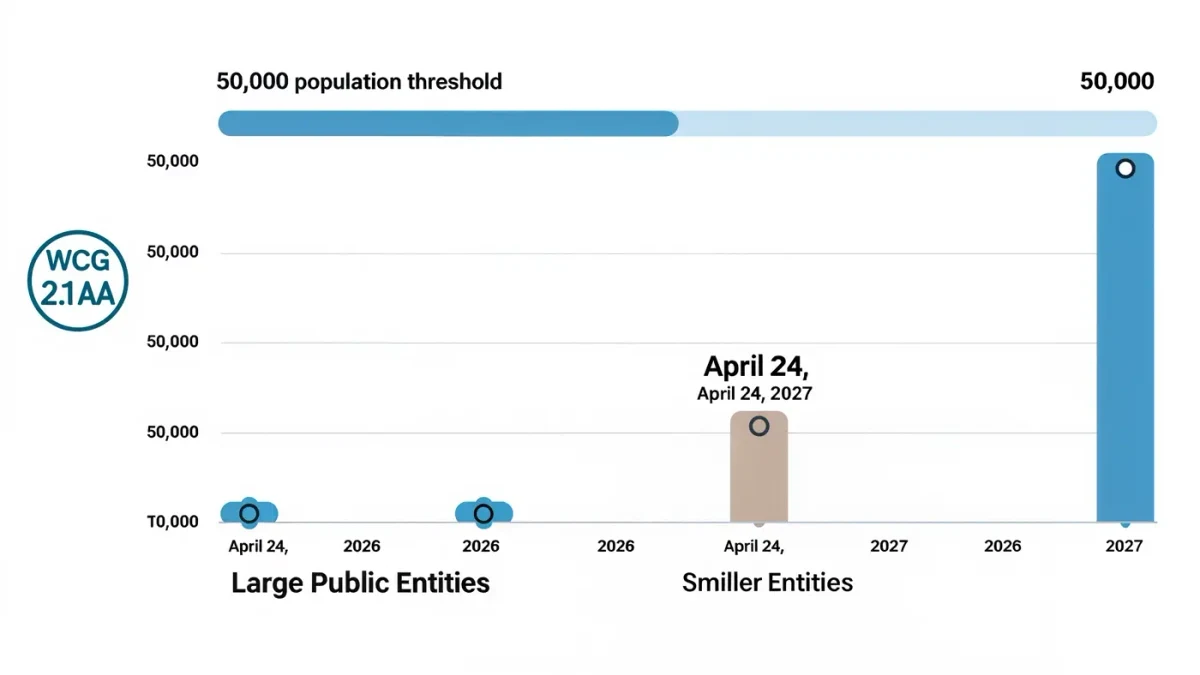
No final general regulation specifies technical standards for private entities' apps; Title III's application arrives through case law, and WCAG 2.1 AA is the settlement-market standard. The DOJ's 2024 Title II rule binds public entities and signals the technical baseline regulators accept.
Do automated scanning tools suffice for an audit?
No — they catch roughly a third of WCAG failures and almost none of the flow-level barriers a screen-reader user encounters. The defensible audit layers manual testing on both platforms, which is also what plaintiffs' counsel does.
What is a VPAT and why does banking ask for it?
The Voluntary Product Accessibility Template and its completed report (ACR) state conformance against WCAG criteria. Bank partner diligence asks because the partner's accessibility exposure extends to its vendors — the same reason your SOC 2 report is requested.