Microsoft entered the contract-review market in May 2026, with an AI legal agent inside Word that reviews agreements, suggests edits, and checks clauses in the document environment where most contracts already live — a move Artificial Lawyer marked on May 1 as "the beginning of a new era for the sector," and one that arrives with distribution advantages no specialist vendor can match: the word processor, the tenant, and the workflow are already deployed. For legal-operations and compliance buyers, the event is less a product announcement than a structural change in what diligence must ask.
3G Times publishes information, not advice; vendor selection belongs to each organization's procurement and security review.
What actually shipped?
Per the May coverage, the offering puts contract review, edit suggestion, and clause checking natively into the Word experience under the Copilot lineage — the document as the interface, rather than a separate platform importing and exporting it. The significance is the seam it removes: for thirty years contract tools charged rent on the gap between where contracts are written and where they are analyzed. When the analysis ships inside the writing surface, that gap — and the integration market built on it — compresses. Specialist vendors' response, visible in the same coverage cycle, is depth: clause libraries tuned by practice area, redline playbooks enforced against house style, and review workflows with matter-context the general surface does not hold.
Why does this reset diligence rather than end it?
Because the incumbent's distribution changes the questions, not the duties. A review tool that lives in the tenant inherits the tenant's data governance — which is either a compliance answer or a compliance problem, depending on terms the diligence must now read line by line: where contract text is processed, what training applies to enterprise tiers, how matter-level isolation maps to privilege boundaries, and what the audit log captures. The OCG and ethics overlays travel with it — an AI reviewer embedded where lawyers draft engages the same disclosure, supervision, and confidentiality analysis any drafting assistant does, and the aggregation across thousands of matters makes the answers matter more, not less. Platform provenance answers security questions faster; it does not answer any of the legal-operations questions at all.
What should buyers put in the evaluation now?
- Benchmarks on your paper, not theirs. Whether incumbent or specialist, the test corpus is the organization's own agreement mix, with reviewers blind to which engine produced which markup.
- Tenant data-path terms. Processing location, training exclusions for enterprise data, retention — the clauses that made or broke the last decade's tools, now with a platform counterparty.
- Playbook enforcement depth. House positions, fallback ladders, and deviation reporting are where specialists still differentiate; price the difference against integration costs the platform erased.
- Exit and portability. Redlines and analysis artifacts exportable in open formats — the same discipline the CLM era taught, applied to the newest layer.
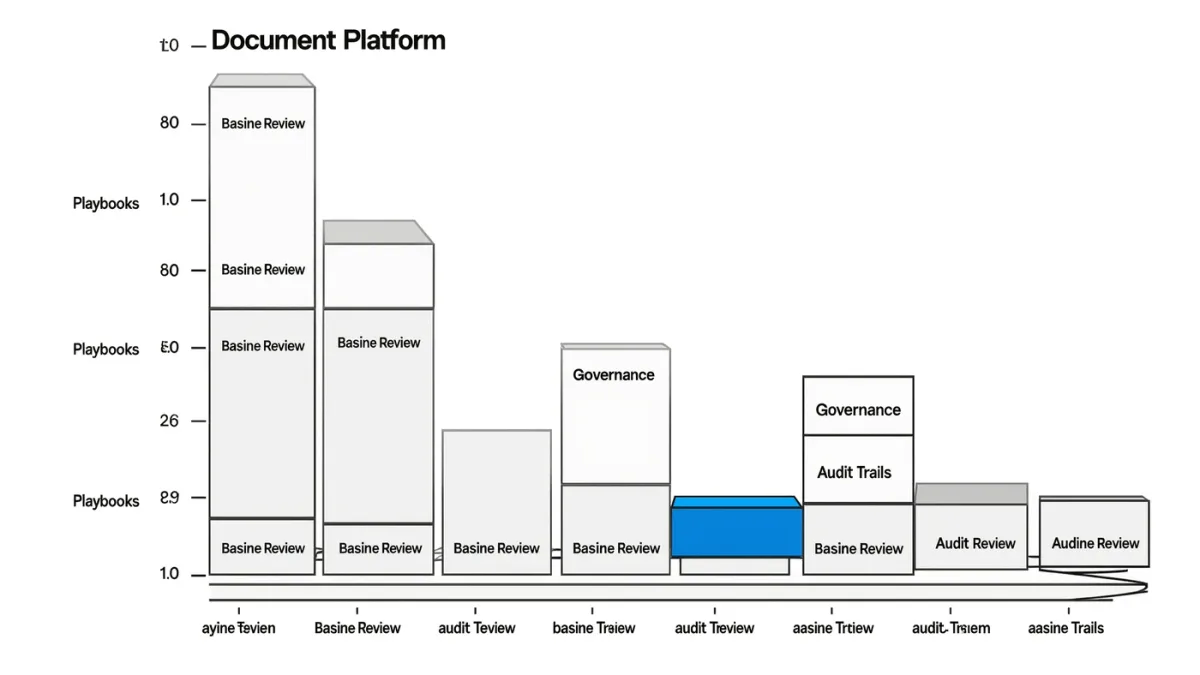
Platform entry usually compresses the commodity layer and sharpens the specialist layer, and contract review shows the classic shape: baseline review commoditizes into the document tool, while negotiated-positions intelligence, workflow governance, and evidence-grade audit trails remain products. The buyers who win the new era are the ones whose diligence asks the same questions of both — because the duties never shipped with the software.