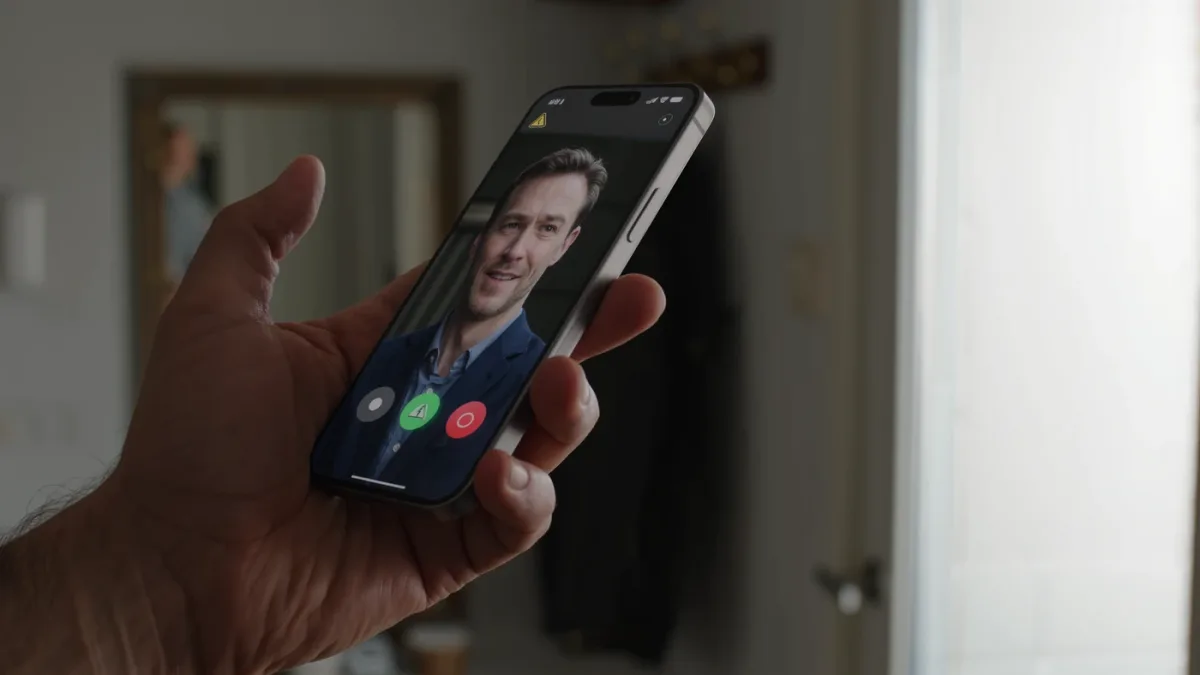

The Federal Communications Commission ruled on February 8, 2024 that AI-generated and cloned voices are "artificial voices" under the Telephone Consumer Protection Act, so calls using them to wireless numbers need prior express consent — written, where the call telemarkets — and each violating call carries $500 to $1,500 in statutory damages. The reading binds lenders, servicers, and fintech marketers alike.
3G Times publishes information, not legal advice. Firms with live TCPA exposure should take the specifics of their calling programs to qualified counsel.
What exactly did the FCC decide?
The declaratory ruling, issued in CG Docket No. 23-318, interprets a statute written in 1991 for tape decks and autodialers. The TCPA, codified at 47 U.S.C. §227, restricts calls made to wireless numbers "using any automatic telephone dialing system or an artificial or prerecorded voice." For three decades "artificial" did heavy but quiet work; voice-cloning engines forced the question of whether a synthesized voice that never existed as a recording counts. The Commission answered that it does: the statute targets the voice the consumer hears, not the machine that produced it.
The proximate cause was the January 2024 New Hampshire primary robocall that cloned a candidate's voice to discourage voting. The FCC opened the docket within weeks, issued the ruling on February 8, 2024, and followed in May 2024 with a proposed $6 million forfeiture against the political consultant behind the call. The enforcement signal is unambiguous — the Commission treats synthetic-voice abuse as a first-order consumer-protection problem, not a technicality.
Which calls count as AI-generated?
Two boundaries matter in practice. First, the ruling reaches technologies that generate or alter a voice — cloning a real person, synthesizing a novel persona, or converting text to speech — regardless of whether the output is stored as a file or streamed live. Second, a genuinely live human agent using an AI script suggestion on their own natural voice is not an "artificial voice"; the line is the synthesis itself. The FCC's companion proposal defines an AI-generated call as one using "any technology or tool" to generate an artificial or prerecorded voice, expressly including machine-learning methods. Fintech deployments that sit on the boundary — accent modulation, emotion injection, post-call voice replacement — should be inventoried and reviewed against that formulation.
What consent does an AI-generated voice need?
Consent under the TCPA is graded by destination and purpose, and the artificial-voice ruling slots synthetic speech into the existing lattice rather than building a new one.
| Destination | Purpose | Consent standard |
|---|---|---|
| Wireless | Marketing or advertising | Prior express written consent, with clear disclosure that calls may be automated |
| Wireless | Informational, servicing, account security | Prior express consent; written form not universally required but safest to obtain |
| Wireless | Healthcare-only exception (rare in fintech) | Narrow exemption for HIPAA-related calls, per the 2015 Omnibus order |
| Residential landline | Marketing | Do-not-call list restrictions and established-business-relationship rules |
| Residential landline | Informational | Generally no consent requirement under §227(b)(1)(B) |
Courts have long split over whether delinquent-debt calls are "telemarketing"; the prudent compliance posture treats any call with a revenue or recovery motive as marketing-grade. That posture ages well when the voice is synthetic, because the FCC's companion proposal would add a second, AI-specific consent layer on top.
What do the pending disclosure rules propose?
On February 15, 2024, the FCC adopted a Notice of Proposed Rulemaking in WC Docket No. 23-318 that would require callers to tell consumers at the outset that a call uses AI-generated technology, obtain explicit opt-in consent before placing AI-generated calls, and support consumer-alerting techniques such as watermarking. The proposal also floats a narrow exemption so that people with disabilities can use AI assistive-voice tools without tripping the consent machinery. These are proposals, not final rules: the distinction matters, and the proceeding's current status should be checked against the docket before a program is built around either outcome. As of this writing, the disclosure obligations had not been adopted in final form.
How did the one-to-one consent vacatur change the picture?
A separate rule would have required consumers to consent to each individual telemarketer after a lead-generation exchange, and it was set to take effect January 27, 2025. On January 24, 2025, the Eleventh Circuit vacated it in Insurance Marketing Coalition, Ltd. v. FCC, holding the FCC exceeded its statutory authority. Comparison-shopping and lead flows therefore reverted to the earlier, context-based consent regime. The vacatur says nothing about AI voices: the February 8, 2024 declaratory ruling stands, and firms that read the Eleventh Circuit's opinion as a general TCPA reprieve have misread it.
Call design deserves its own review, because the boundary cases are where exposure concentrates. A servicing call that opens with a synthesized summary in the borrower's preferred language is an artificial-voice call from the first syllable. A collection flow that uses a recorded snippet for the disclosure sentence and a live agent for negotiation is a prerecorded call in part, and consent analysis follows the recorded component. A voice assistant that lets a customer opt into spoken statements at account opening has, if the disclosure was plain, a consent artifact worth preserving verbatim — the version of the script shown, the checkbox state, and the timestamp all belong in the retention store.
What does this mean in practice?
- Audit the voice stack. Every vendor that touches outbound audio — dialers, TTS engines, avatar tools, dubbing services — should be listed with a mapping to the consent basis for each call stream, reviewed quarterly.
- Rewrite consent language now. Disclosure and agreements should say calls may be made using prerecorded or AI-generated voices and obtain affirmative agreement; consent captured before 2024 for "automated calls" is a weak foundation for a cloned-voice campaign.
- Archive the evidence chain. TCPA class actions turn on provable consent — timestamp, disclosure shown, and version of the terms — so retention policy for consent artifacts should outlast the limitations period.
- Contract for indemnity. Where a third party generates the voice, the vendor contract should allocate statutory-damages exposure explicitly; the FCC holds the caller responsible regardless.
The quiet consequence of the 2024 ruling is that voice has become the most regulated consumer touchpoint a fintech operates. A synthetic voice is now a legal instrument, and consent is the only thing that makes it playable.
Frequently asked questions
Does a live agent using AI-generated scripts trigger the artificial-voice rule?
No, not when the human speaks with their own natural voice. The ruling targets synthesized or cloned audio the consumer hears. But if the platform clones the agent's voice for playback, or post-processes the voice stream, the artificial-voice analysis applies and the consent machinery follows.
Is consent required for servicing calls about an existing loan?
Prerecorded or artificial-voice calls to wireless numbers need prior express consent even when the content is servicing rather than marketing, though the written-consent formality applies to telemarketing. Established-business-relationship assumptions from landline practice do not transfer cleanly to cells, and courts differ on where debt-recovery calls fall.
What penalties attach to a violating call?
The TCPA sets statutory damages at $500 per call, rising to $1,500 for willful or knowing violations, with no cap on aggregate exposure in class litigation. State mini-TCPAs layer additional remedies in several jurisdictions.
Did the one-to-one consent rule ever take effect?
No. Its effective date was January 27, 2025, and the Eleventh Circuit vacated it on January 24, 2025, three days earlier. The underlying requirement of prior express consent for telemarketing calls was never disturbed — only the added per-recipient matching rule for lead generators fell.