Tap-to-pay wallets protect money mainly through tokenization: the app swaps a real card number for a payment token, so a merchant breach never exposes the card itself. Federal law adds a fraud shield. Under Regulation E, liability for unauthorized transfers from a linked account is capped at $50. The cap holds when the loss is reported within two business days.
Digital wallets now sit at the center of everyday checking. Most banks let customers link an account to a phone wallet and pay with a tap. Credit unions offer the same path. The sections below cover how tokens work, who pays when fraud happens, and what to weigh before choosing a wallet. Readers following this should also see Digital Federal Credit Union — Digital Credit Unions: How Neobank-Style Banking Works Under a Co-op Charter.
What is a digital wallet?
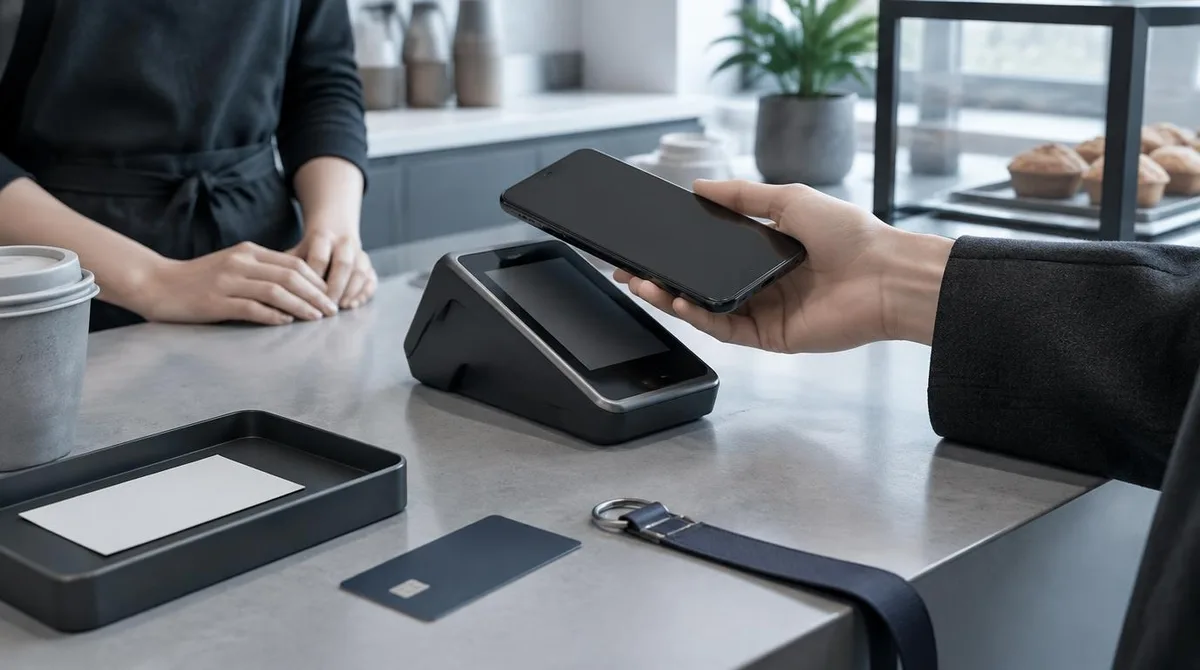
A digital wallet is an app that stores payment details on a phone or watch. At the counter, the device passes those details to a terminal over a short radio link. The payment completes in seconds. EMVCo, the body behind the global chip card standards, describes secure in-store payments made with chip cards and NFC mobile devices.
How does tokenization keep card data safe?
The safety comes from what the merchant receives. Per EMVCo's published description of its standard, the technology "replaces valuable card data with payment tokens to increase the security of mobile and e-commerce transactions." The standard is published on EMVCo's tokenization page. A token works only inside the device and channel that created it. A stolen token is far less useful than a stolen card number. The real card data never sits in the merchant's system.
Who pays when wallet fraud happens?
Regulation E governs unauthorized transfers from consumer accounts, and its tiers reward speed. A consumer who reports a lost or stolen access device within two business days faces a cap of $50. The tiered limits appear at 12 CFR 1005.6(b). Report later, and exposure can rise to as much as $500. An unknown transfer left on a statement past 60 days can also become the consumer's bill. The limits bind the institutions that hold the accounts.
Do the same rules apply at a credit union?
Yes. The shield follows the account, not the app. Regulation E lists the covered institutions at 12 CFR 1005.2(i). The list names a bank, savings association, or credit union, among others, and any person that holds a consumer's account or issues an access device. A wallet linked to a credit union checking account gets the same tiers as one linked to a national bank. Coverage attaches to the linked account. A wallet holding only a prepaid balance raises different questions.
How should consumers compare wallet options?
Three checks separate the good options from the rest. First, confirm the wallet tokenizes card details. Vendors say theirs do, and that claim is the core of tap-to-pay security under EMVCo's framework. Second, confirm the device locks behind a passcode or a fingerprint. A token is only as safe as the phone that holds it. Third, check the linked institution's dispute channel and how fast it reverses unauthorized transfers.
What this means in practice
- Report a lost or stolen phone or card within two business days to hold liability at the $50 tier under 12 CFR 1005.6(b).
- Review monthly statements and contest any unknown transfer within the 60-day window the rule sets.
- Prefer wallets that tokenize card details and lock behind a passcode, and treat vendor security claims as vendor claims.
Conclusion: the token and the clock do the work
Tap-to-pay is safe by design and by statute. The token keeps the real card number away from merchants. Regulation E keeps the consumer's downside small when the report comes fast. Speed is the lever a consumer controls. This article is for informational purposes only and is not legal advice; for decisions about specific facts, work with qualified counsel. This connects to our earlier piece, GDPR Article 22 and Fraud Models: When Automated Decisions Need Human Review in the EU.